


Table of Contents
ToggleMost gamers are familiar with historical battles through games like Total War, Civilization, or even Call of Duty: Warzone’s seasonal content, but few have experienced the weight of standing where real history unfolded. Custer Battlefield National Monument, located in Montana, preserves one of America’s most pivotal military confrontations: the Battle of the Little Bighorn in 1876. While the site might not feature permadeath mechanics or respawns, it absolutely delivers on narrative complexity, conflicting perspectives, and a storyline that still sparks debate over a century later. Whether you’re into historical accuracy, cultural narratives, or simply want to understand how real battles compare to their digital counterparts, this monument offers surprising depth. Gamers who appreciate immersive worldbuilding and morally gray stories will find genuine value in exploring this landmark and understanding the historical context that shaped American military strategy and Native American resistance.
Key Takeaways
- Custer Battlefield National Monument in Montana preserves the Battle of the Little Bighorn (1876), a pivotal military confrontation where General Custer’s strategic failures and underestimation of Native American forces resulted in catastrophic losses with no possibility of reversal.
- The monument presents conflicting narratives from both military and indigenous perspectives, challenging the historically dominant portrayal of Custer as a tragic hero and instead highlighting decades of colonial policy, forced relocations, and cultural suppression that framed the battle as resistance to existential erasure.
- Gamers familiar with strategy-based games like Total War and Civilization can directly apply lessons from Custer Battlefield’s terrain, tactical positioning, and irreversible consequences—offering real-world context that digital simulations cannot fully replicate.
- Visitors should plan spring or fall visits for moderate weather and fewer crowds, allow 1.5-2 hours for the museum, and tackle the Last Stand Hill Trail (1.5 miles) to experience the actual landscape that shaped the battle’s outcome.
- The site operates year-round with admission at $7 per vehicle, featuring accessible visitor facilities, multiple walking trails, and interpretive exhibits that deliberately present both the Lakota Sioux, Northern Cheyenne, and military accounts of the engagement.
Understanding Custer Battlefield National Monument
Location And Historical Significance
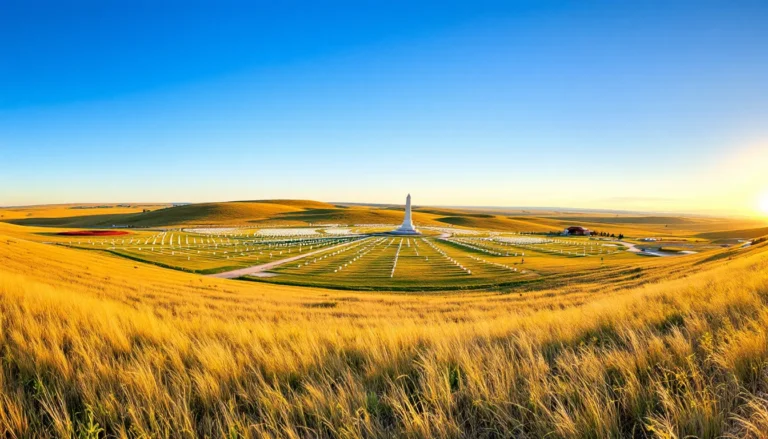
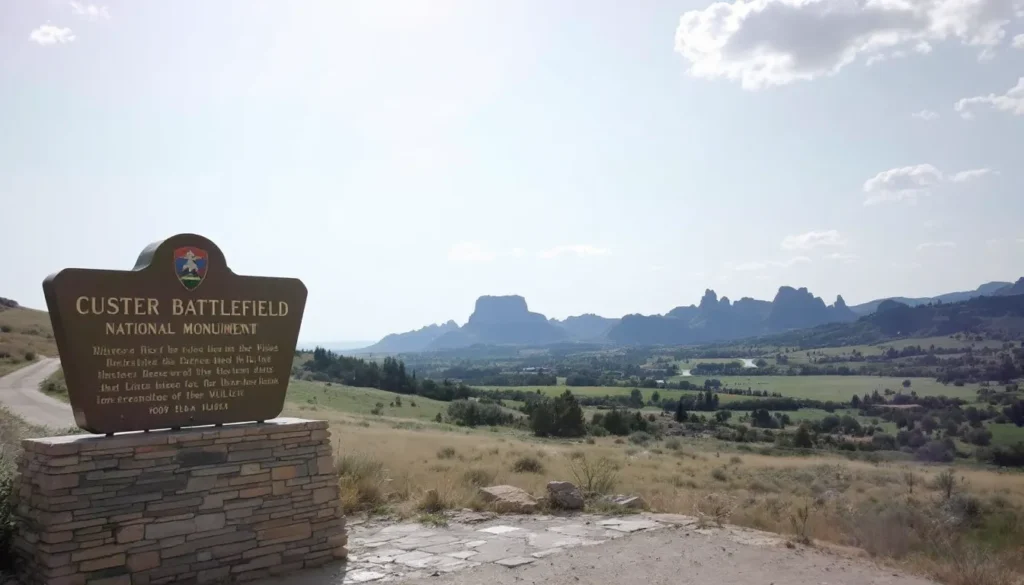
Custer Battlefield National Monument sits on the Crow Indian Reservation near Hardin, Montana, a location that’s less than an eight-hour drive from Billings if you’re planning a road trip. The site encompasses approximately 765 acres of rolling grassland, buttes, and ravines that directly overlook the Little Bighorn River. What makes this location particularly significant isn’t just the battle itself, but the fact that the monument exists within tribal lands, which has become increasingly important for telling a more complete historical narrative.
The Battle of the Little Bighorn occurred on June 25-26, 1876, and represented a watershed moment in American military history. For context, this was a period when the U.S. Army was expanding westward, clashing with Native American tribes trying to preserve their way of life. The significance of Custer Battlefield extends beyond military strategy, it’s about territorial sovereignty, cultural survival, and how history gets written by the victors (or in this case, by those who survived to tell their version of events).
The Battle Of The Little Bighorn: What Happened
General George Armstrong Custer led the 7th Cavalry Regiment with approximately 900 soldiers and scouts against an encampment of Lakota Sioux, Northern Cheyenne, and Arapaho warriors, a coalition estimated between 1,500 to 2,500 fighters, though exact numbers remain debated. Custer made a critical decision: he split his regiment into battalions, refused additional cavalry reinforcements, and chose to engage immediately rather than wait for backup. Sound like a risky flanking strategy that didn’t get properly tested in the meta? That’s because it was.
The battle itself lasted roughly two days. The initial assault under Custer’s direct command on the afternoon of June 25 resulted in catastrophic losses. Custer, along with approximately 268 soldiers and scouts under his immediate command, were killed on what’s now called “Last Stand Hill.” The other battalions suffered significant casualties but were eventually relieved by additional Army units arriving from the south. The Native American forces, led by leaders like Sitting Bull, Crazy Horse, and Two Moon, achieved a rare military victory, but it was eventually a pyrrhic one. The government response was swift and devastating: increased military campaigns that led to the forced relocation of the tribes onto reservations.
Why Gamers Should Care About This Historic Site
If you’ve ever played a Total War game and had your careful battle plan completely unravel because you underestimated enemy positioning or divided your forces incorrectly, you understand the core of what happened at the Little Bighorn. Custer’s tactical decisions, splitting his regiment, refusing reinforcements, underestimating enemy strength, are textbook examples of poor strategic planning with real-world consequences. This isn’t theory: it’s a documented case study in military failure.
For gamers specifically, Custer Battlefield offers something that virtual games simulate but real history lived: the permanent, irreversible consequences of failed strategy. There’s no reload. The 268 soldiers under Custer’s command didn’t respawn. Understanding this distinction between gameplay simulation and historical reality adds valuable context to how games depict warfare. The monument serves as a sobering reminder that history is messier, less choreographed, and far more consequential than even our most immersive gaming experiences can fully capture.
Planning Your Visit To The Monument
Best Times To Visit And Seasonal Considerations
The ideal visiting window depends on your tolerance for weather and crowds. Summer (June through August) sees the most visitors, which makes sense given the historical timing of the June 1876 battle and the improved road conditions. But, peak season also means higher temperatures, often exceeding 85°F, and more crowded interpretive programs. If you prefer quieter exploration, spring (April-May) and fall (September-October) offer moderate temperatures and significantly fewer tourists. Winter visits are possible but not recommended unless you’re equipped for harsh conditions: snowfall and wind can make trails treacherous and close some facilities.
One practical tip: the 90-minute drive from Billings on Interstate 90 East can vary depending on weather, so plan accordingly. The nearest towns, Hardin and Crow Agency, offer lodging and dining options, though availability tightens during peak summer months.
Facilities And Visitor Amenities
The monument includes a modern visitor center (opened in 2003 after renovations) with restroom facilities, a bookstore, and a small café for basic refreshments. There’s a 4.75-mile scenic loop drive that you can complete in roughly 30-45 minutes if you’re just driving it straight through, though most visitors stop at overlooks and trailheads. Picnic areas are available, so bringing a lunch is a cost-effective option.
Parking is free and abundant. Cell service can be spotty depending on your carrier, so download offline maps if you’re using GPS. The visitor center operates daily (hours vary seasonally), and admission fees apply, details below. There are no on-site hotels or camping facilities, so you’ll need to base yourself in nearby towns. The monument has wheelchair-accessible areas near the visitor center and along portions of the loop drive, though some trails involve elevation gain and uneven terrain.
Exploring The Monument Grounds
Walking Trails And Key Landmarks
The monument offers multiple trails ranging from short walks to more strenuous hikes. The Last Stand Hill Trail (1.5 miles round-trip) is the most iconic, it climbs approximately 300 feet to the site where Custer and his immediate command made their final stand. The views from the top are genuinely striking, with clear sightlines across the valley where the battle unfolded. This trail is moderately strenuous but doable for most fitness levels in 45-60 minutes.
The Medicine Tail Coulee Trail (1 mile round-trip) explores the ravine where the initial attack occurred. This is a shorter, less strenuous option that provides crucial context for understanding how the terrain itself influenced tactical outcomes. The Greasy Grass Trail (2 miles round-trip) is a newer addition that incorporates the Lakota Sioux name for the Little Bighorn and provides the Native American perspective on the battle.
Key landmarks include cemetery markers indicating soldier burial sites, interpretive plaques explaining battle movements, and several elevated overlooks offering panoramic views. The terrain can be uneven and exposed, bring water, wear proper footwear, and plan for limited shade. Many visitors underestimate the Montana sun and wind, so sun protection is non-negotiable even on cooler days.
The Museum And Interpretive Center
The Indian Village Visitor Center (renamed to acknowledge the primary perspective) contains exhibits detailing the battle from multiple viewpoints, artifact displays, and detailed dioramas reconstructing the encampment layout. The museum doesn’t shy away from presenting both military and Native American narratives, though it’s worth noting that decades of scholarship have increasingly centered indigenous perspectives that were historically marginalized.
The center features a 15-minute documentary introducing the battle’s context, and staff rangers offer guided tours and interpretive talks during peak season. The bookstore stocks extensive historical resources ranging from academic texts to accessible overviews, making it easy to dig deeper into specific aspects of the battle. Allow 1.5-2 hours for a thorough museum visit if you’re genuinely interested in the material, or 45 minutes for a quicker overview before heading to the trails.
Historical Context: Native American And Military Perspectives
The Lakota Sioux And Allied Tribes
The coalition opposing Custer wasn’t a unified nation, it was a temporary alliance of distinct tribes united by shared threats and circumstances. The Lakota Sioux (Teton Sioux) formed the largest contingent, led by Sitting Bull, a spiritual leader and war strategist who had organized the encampment and advocated for resistance. Crazy Horse commanded the most aggressive tactical operations during the battle itself. The Northern Cheyenne and Arapaho tribes contributed additional warriors, while some Shoshone and Crow scouts actually served with the 7th Cavalry, adding another layer of complexity to the narrative.
The encampment was substantial: somewhere between 5,000-12,000 total people (warriors, women, children, and elders), with estimates suggesting 1,500-2,500 warriors actually engaged in combat. This wasn’t a rogue war party: it was a major village that had assembled to hunt buffalo and discuss tribal matters. The gathering itself violated U.S. government expectations that the tribes remain on assigned reservations, creating the pretext for military intervention.
What often gets glossed over in mainstream accounts is that this battle occurred during an active genocide, not metaphorically, but as actual policy. The Buffalo Slaughter, forced relocations, broken treaties, and systematic suppression of indigenous culture formed the broader context. The battle at the Little Bighorn wasn’t an isolated military engagement: it was resistance to existential erasure.
General George Armstrong Custer And The 7th Cavalry
George Armstrong Custer was a controversial figure even before the Little Bighorn. He’d graduated at the bottom of his class at West Point, earned recognition during the Civil War even though reckless decisions that got soldiers killed, and developed a reputation for self-promotion and insubordination. By 1876, Custer was 36 years old, politically ambitious, and desperate to maintain military prominence as American expansionism slowed.
The 7th Cavalry under Custer wasn’t an elite unit, it included significant numbers of recent immigrants with minimal English fluency, newly recruited soldiers with limited training, and a command structure that reflected Custer’s personal preferences rather than military capability. The cavalry lacked modern artillery, had limited ammunition capacity, and Custer actively rejected additional resources (including additional cavalry units and Gatling guns) because he feared the enemy would slip away. This decision-making reflects overconfidence bordering on delusion about the 7th Cavalry’s capacity and the threat they faced.
Conflicting Narratives And Historical Accuracy
For over a century, the battle narrative in America was dominated by military accounts and Custer’s mythology. He was often portrayed as a tragic hero killed by overwhelming odds, a narrative that ignored his strategic failures and the legal/moral dimensions of the conflict. Indigenous perspectives were systematically excluded from mainstream historical accounts until relatively recent scholarship and policy shifts.
Today’s understanding incorporates extensive oral histories from Lakota Sioux and Northern Cheyenne descendants, archaeological evidence, and cross-examination of military records. The result is a far more nuanced picture: Custer’s tactics were tactically and strategically flawed, the 7th Cavalry was unprepared, and the encampment’s warrior coalition was indeed larger and better-positioned than American commanders anticipated. The Native American forces demonstrated superior tactical coordination and battlefield awareness, even as the broader military campaign eventually resulted in their forced relocation and cultural suppression.
Visiting the monument today means encountering this contested history directly. Different plaques present different perspectives. The visitor center deliberately presents both viewpoints. This isn’t false balance, it’s recognition that historical “truth” is complex and that those present at the battle experienced fundamentally different events based on their position, culture, and stakes involved. As a gamer, you’re familiar with unreliable narrators and multiple viewpoints: the Little Bighorn operates similarly, except the consequences were permanent and devastating.
Video Games And Popular Culture References
How Games Depict The Battle Of The Little Bighorn
The Battle of the Little Bighorn shows up with surprising frequency across gaming franchises, though rarely as the primary focus. Little Big Adventure 2 includes references in its pseudo-historical world-building. Civilization V and Civilization VI feature Sitting Bull as a leader option, allowing players to guide the Lakota civilization through the tech tree, which creates an interesting alternate-history scenario where indigenous nations compete on equal footing with European powers. Crusader Kings III similarly allows players to roleplay indigenous leadership during the frontier period, though historical accuracy in CK3 is deliberately secondary to gameplay mechanics.
Where the battle gets more direct treatment is in educational games and historical simulations. Some titles attempt realistic tactical recreations where players command either Custer’s forces or the Native American coalition. But, most games simplify the actual battle dynamics significantly, terrain influence, supply lines, scout capabilities, and morale management get reduced to simplified mechanics. The human cost gets abstracted into numerical units, making the permanent consequences less visceral than the real event.
Comparing Game Portrayals To Historical Reality
Most game depictions undersell the role of terrain and local knowledge. The Little Bighorn battle unfolded across ravines, grass-covered slopes, and river valleys where visibility was limited and positioning was constantly shifting. Games typically represent these as static map features, missing how indigenous warriors used the terrain as a strategic advantage through intimate familiarity with the landscape. Custer’s forces were effectively fighting blind, while the opposing coalition moved with confidence through terrain they knew intimately.
Game mechanics also rarely capture the role of morale and commitment. The Native American forces at the Little Bighorn weren’t mercenaries or conscripted soldiers, they were fighting for their lives and their people’s survival. That existential stakes vs. professional soldiering distinction creates massive differences in combat effectiveness that games rarely model. Also, most game depictions oversimplify the internal politics of the 7th Cavalry. Custer made decisions against the advice of subordinates and rejected additional resources. Those power dynamics and command failures are crucial to understanding why the battle unfolded as it did.
When you visit the Custer Battlefield National Monument, you encounter the real consequences of these decisions, the actual terrain you walk, the distances that become exhausting when traversed on foot, the heat and exposure that shaped soldiers’ physical and mental state. Games simulate combat: monuments preserve the weight of consequence. That distinction is why historical sites offer something digital entertainment genuinely cannot: permanent reality that forces grappling with the actual human cost of military decisions and territorial conflict.
Practical Visitor Information
Admission Fees And Hours Of Operation
Admission to Custer Battlefield National Monument costs $7 per vehicle or $5 per motorcycle/bicycle (as of 2026). Annual passes are $25 and provide unlimited visits. The visitor center operates 8:00 AM to 6:00 PM daily during peak season (April-October) and 8:00 AM to 4:30 PM during off-season (November-March). The monument grounds remain accessible during daylight hours even when the visitor center is closed, though restrooms and interpretive programs are unavailable.
Access to the scenic loop drive and trailheads requires passing through the visitor center entrance, so plan accordingly if you’re arriving when the center is closed. The summer solstice period (late June) offers extended daylight, making it practical to arrive later in the day and still have adequate time for at least a short exploration. Winter visits require careful timing given early sunset (around 4:45 PM in December).
Dining, Lodging, And Nearby Attractions
The monument itself offers no overnight lodging or full-service dining. The visitor center café serves basic options, sandwiches, snacks, beverages, but it’s not a meal replacement. Most visitors base themselves in Hardin or Crow Agency, both roughly 20-25 minutes from the monument. Hardin offers several chain hotels (Motel 6, Best Western) and locally-owned options. Crow Agency is smaller but has basic accommodations through the Crow tribe’s hospitality services.
For dining beyond the monument café, Hardin has typical frontier-town options: diners, Mexican restaurants, and casual chains. Nothing remarkable for gastronomy, but adequate for fueling between monument exploration and other activities. Nearby attractions include the Bighorn Canyon National Recreation Area (roughly 40 minutes north), which offers stunning scenery and outdoor activities. The Crow Indian Reservation itself encompasses the monument area and offers cultural experiences and museums documenting Crow history and contemporary tribal life.
About gaming and entertainment culture coverage, outlets like Polygon often cover historical games and educational gaming content, while competitive gaming coverage from esports organizations gives context to how gaming communities engage with historical narratives. If you’re seeking dedicated platform-specific content (particularly PlayStation-focused guides and reviews), Push Square provides extensive resources. For recognizing games that balance historical accuracy with engaging gameplay, The Game Awards annually highlight titles that push narrative and educational gaming forward, offering perspective on how the industry approaches historical subjects.
Conclusion
Custer Battlefield National Monument isn’t a typical gamer pilgrimage, but it genuinely offers value if you appreciate games with complex narratives, moral ambiguity, and consequences that can’t be reloaded. The site forces engagement with historical nuance, conflicting perspectives, flawed decision-makers on both sides, and understanding how terrain, resources, and morale shape outcomes. These are mechanics that good game design attempts to capture, but the monument preserves them at a scale and weight that digital simulation struggles to match.
The practical reality of standing on Last Stand Hill, looking across the terrain where 268 soldiers died due to strategic overconfidence and underestimation of opposition, provides context that no cutscene or mission briefing can fully replicate. Similarly, learning about the broader policy of forced relocation and cultural suppression that framed the battle adds narrative depth that enriches understanding of why this moment mattered so profoundly.
If your next gaming session includes Civilization’s Lakota civilization, Total War’s tactical mechanics, or any title engaging with historical military strategy, visiting Custer Battlefield offers a grounding experience that makes future gaming feel more informed. The monument preserves a genuine failure of strategy, leadership, and judgment, something most games shy away from depicting with genuine consequences. That’s precisely why it’s worth the trip.