




Table of Contents
ToggleFinal Fantasy game covers represent some of the most recognizable and sought-after artwork in gaming history. From the pixel-art charm of the early entries to the CGI masterpieces that graced PS1 cases, cover art has been integral to how players connect with the franchise before they even press start. The franchise’s visual identity doesn’t just sell games, it defines entire generations of gaming culture. Whether you’re digging through retro collections or preordering the latest physical edition, the cover itself has become a collectible artifact that tells the story of gaming’s artistic evolution. This deep dive explores how Final Fantasy game covers have transformed over decades, who created them, and why some designs remain absolutely unforgettable.
Key Takeaways
- Final Fantasy game covers have evolved from pixel-art illustrations in the 8-bit era to photorealistic CGI masterpieces on PS1, establishing the franchise’s visual identity and influencing gaming packaging standards for decades.
- Character selection on Final Fantasy game covers defines narrative priority and emotional tone, with iconic designs like Cloud’s silhouette and Tidus’s positioning becoming visual anchors that shape player perception before gameplay begins.
- Regional variations in Final Fantasy game covers across Japan, North America, and Europe created a dedicated collecting subculture, with different artistic choices and compositions reflecting distinct cultural aesthetics and marketing strategies.
- Modern steelbook editions and premium collector’s releases transformed Final Fantasy game covers into luxury art objects, with exclusive designs commanding premium prices and serving as investment-grade merchandise in the secondary market.
- Yoshitaka Amano’s watercolor-influenced artistic vision fundamentally shaped Final Fantasy game covers across generations, establishing a template that proved videogame characters could possess fine-art sophistication while remaining immediately recognizable.
- Final Fantasy X’s crystalline aesthetics and aquamarine color grading created one of gaming’s most beloved covers, demonstrating that strong compositional design and color psychology create instantly identifiable artwork that endures across multiple decades.
The Evolution of Final Fantasy Cover Design
Early Era Aesthetics (FF I-III)
The original Final Fantasy covers established a template that influenced 8-bit and 16-bit gaming aesthetics for years. These early designs relied on hand-drawn artwork that captured an almost mythical quality, warriors in golden armor, crystalline imagery, and fantastical monsters rendered in vibrant but limited color palettes. Final Fantasy I featured a striking red-clad warrior against a dramatic backdrop, immediately signaling “epic adventure” to anyone browsing the Famicom or NES shelf.
By the time Final Fantasy III rolled around, artists had mastered the constraints of the console generation. The covers grew more intricate, with multiple characters sharing space and richer environmental detail. These weren’t just game cases, they were gateways to imagination. The pixel-art style worked in the covers’ favor, creating an aesthetic consistency between the box and what players would see on screen. This cohesion made the experience feel unified and intentional.
Regional variations started appearing here too. Japan’s Final Fantasy III cover differed significantly from North American releases, sometimes featuring different color schemes or character priorities. These choices reflected cultural preferences in art direction and marketing strategy.
The Transition to 3D and CGI Covers (FF VII-X)
Nothing changed Final Fantasy cover design faster than the leap to 3D. Final Fantasy VII marked a watershed moment, suddenly covers could showcase pre-rendered CGI that looked more cinematic than anything possible in-game. Nomura’s character designs, rendered in stunning detail, replaced hand-drawn artwork. Cloud Strife’s iconic spiky hair and oversized buster sword commanded attention on every shelf.
The PS1 era allowed for photorealistic lighting, detailed textures, and composition that mimicked movie posters. Final Fantasy VIII pushed this further with Squall and Rinoa featured in a more intimate, dramatic embrace. Final Fantasy IX returned to a slightly more stylized approach, blending CGI with painterly elements. By Final Fantasy X, the covers had achieved a level of visual sophistication that felt almost indistinguishable from concept art, crystalline waters, ethereal characters, and that distinctive blue-tinted color grading that screamed PS2 JRPG.
These covers did something crucial: they made buying a Final Fantasy game feel like a premium experience. The artwork elevated the physical product above competitors, creating a visual hierarchy on store shelves. Gamers weren’t just buying software: they were acquiring art.
Modern Cover Art Trends (FF XIII-XVI)
The current generation saw a deliberate stylistic shift. Final Fantasy XIII leaned into sleeker, more minimal compositions with heavy use of black backgrounds and dynamic character posing. The aesthetic became more industrial, matching the game’s themes. Final Fantasy XV took a different approach, it featured Noctis in contemplative poses with atmospheric, almost photographic environments that blended CGI with painterly effects.
Recent entries like Final Fantasy XVI have embraced a more cinematic, almost film-poster approach. The cover design now competes directly with entertainment media across all platforms. Since players interact with digital storefronts as much as physical ones, covers must work at thumbnail size on a phone screen as well as displayed on a collector’s shelf. This dual requirement pushed designers toward bold compositions with strong focal points and minimal clutter.
The rise of digital distribution changed expectations too. Physical releases became premium editions, collector’s sets with special packaging, hardcover artbooks, and multiple cover variants. Standard digital versions barely exist as visible products, so physical covers became a luxury item and status symbol among collectors. The artwork evolved to justify the premium price tag, incorporating metallic finishes, embossing, and collaborative artwork from renowned artists.
Iconic Main Character Covers and Their Impact
How Character Selection Defines a Game’s Identity
Every Final Fantasy game’s cover essentially makes a promise: this character, this story, this vision defines what you’re about to experience. The decision to feature one protagonist over an ensemble cast isn’t just marketing, it establishes narrative priority. Final Fantasy VII putting Cloud front-and-center made him the face of the franchise for an entire generation, even though the game’s ensemble narrative. Similarly, Final Fantasy X centered Tidus, making him the emotional anchor even though Yuna’s equal narrative importance.
Cover design psychology runs deep here. A character’s expression, pose, and context telegraph the emotional tone. Cloud’s determined grimace feels different from Final Fantasy VIII’s Squall staring pensively into the distance. Final Fantasy IX’s Zidane radiates youthful optimism compared to the more melancholic heroes of later entries. Japanese artists understood that these images would become players’ mental touchstones for years after putting the controller down.
Character selection also reflects industry trends. As 3D technology matured, covers shifted from showing characters against generic fantasy backdrops to placing them in more compositionally complex scenarios. The evolution parallels how game narratives themselves became more sophisticated, earlier games needed simpler visual communication, while modern covers can rely on subtlety and cinematic framing.
Most Memorable Character-Focused Covers
Final Fantasy VII Remake’s cover modernized the original’s formula while keeping Cloud’s iconic silhouette recognizable. The updated design maintained visual continuity with the original while reflecting contemporary game packaging standards, a delicate balance that Roto Games nailed.
Final Fantasy X’s cover stands as perhaps the franchise’s most emotionally resonant design. Tidus and Yuna’s positioning suggests their intertwined destinies, while the crystalline aesthetics and aquamarine color grading create an immediately distinctive visual identity. Walk into any retro game shop and this cover pops, the color work is that effective.
Final Fantasy VI, retroactively, became iconic for featuring Terra’s transformation and the ensemble’s scale. Though released on SNES with technical limitations, the cover’s composition conveyed epic scope and character diversity. Modern rereleases have recontextualized this artwork as a masterpiece of era-appropriate character communication.
Final Fantasy XV took risks by showing Noctis without the usual power fantasy pose. Instead, the cover suggests vulnerability and internal conflict, a visual representation of the game’s emotional core. This design choice influenced how subsequent story-heavy JRPGs approached their cover imagery, moving away from pure badass positioning toward narrative authenticity.
Cover art for the Final Fantasy franchise functions as visual spoilers too. Observant players notice character deaths, power-ups, or transformations featured in cover designs, creating a meta-layer of communication between artist and player. Some covers intentionally hide certain characters or plot developments, making the reveal more impactful when discovered in-game.
Regional Variations and Alternative Cover Art
Japan vs. North America vs. Europe Cover Differences
Final Fantasy’s global presence meant cover art diverged significantly across territories. Japanese releases prioritized visual sophistication and artistic expression, often featuring more complex compositions and deeper color palettes. North American covers adapted these designs for market preferences, sometimes simplifying layouts or adjusting color schemes to what research suggested would appeal to Western audiences. European releases occupied a middle ground, occasionally featuring entirely unique artwork distinct from both regions.
Final Fantasy IV exemplifies these differences perfectly. The Japanese Famicom version featured detailed character artwork with nuanced shading. The North American SNES release, packaged as “Final Fantasy II,” used different cover art entirely, simpler, more cartoon-like proportions that felt more appealing to that region’s gaming culture. European versions sometimes got Japanese artwork, sometimes got American designs, depending on the publisher’s choices.
PS1-era releases showed less variation as globalization accelerated, but distinct regional preferences remained. Japanese covers maintained higher artistic ambition, featuring Nomura’s character artwork in all its detailed glory. North American releases sometimes cropped or repositioned character artwork to emphasize different focal points. These weren’t mistakes, they were calculated decisions reflecting market research and cultural aesthetics.
The practice of regional variations created a collecting subculture. Dedicated fans hunt for international versions, seeking the subtle differences in artwork and packaging. A Japanese copy of Final Fantasy VII looks distinctly different from North American and European PAL versions. These variations aren’t just cosmetic, they’re artifacts of how games were marketed regionally during pre-internet eras when each region operated semi-independently.
Special Edition and Collector’s Edition Artwork
Modern Final Fantasy releases embrace variant covers and premium packaging. Final Fantasy XV’s special editions featured multiple cover designs, metallic finishes, and hardcover artbooks. Final Fantasy XVI released with collector’s editions containing steelbook cases with artwork that rivals professional gallery quality.
These premium editions serve a purpose beyond the game itself. The cover art becomes collectible in its own right. Steelbook designs by artists like the teams behind limited-run releases elevate game packaging into interior design territory. A steelbook cover looks striking on a shelf, competing with physical media that hasn’t disappeared but rather evolved into luxury formats.
Special editions often feature alternate character artwork, concept sketches, or limited-run designs never available in standard releases. Final Fantasy VII Remake’s deluxe editions included multiple cover variants showing different character compositions. Collectors understand that purchasing these editions means acquiring specific, time-limited artwork. Once production ends, those covers enter the secondary market, commanding premium prices.
Regional special editions add another layer of complexity. A Japanese collector’s edition might feature entirely different cover art than the equivalent North American release. Some artwork never leaves Japan, creating genuine scarcity. This regional gatekeeping of cover designs has become intentional marketing strategy, rewarding international shipping costs and import enthusiasm.
The Artists and Creative Vision Behind Final Fantasy Covers
Notable Cover Designers and Their Contributions
Final Fantasy covers didn’t manifest from corporate focus groups, they emerged from deliberate artistic vision. The early entries benefited from talented illustrators who understood how to compress narrative emotion into a single image. Hiroyuki Ito, renowned for his battle system design, also contributed to visual direction that influenced cover aesthetics. The collaboration between multiple artistic disciplines created cohesive visual identity.
Nomura’s ascendancy to character design lead during the PS1 era fundamentally changed how Final Fantasy covers looked. His style, angular, dramatic, fashion-forward, became synonymous with the franchise’s modern visual language. When players see a Nomura character on a cover, they immediately recognize the pedigree. His character designs were so iconic that they transcended the games themselves, appearing on merchandise, figurines, and tattoos.
The transition from in-house talent to collaborating with acclaimed artists accelerated during the PS2 generation. Final Fantasy increasingly brought in renowned Japanese illustrators, some from the anime and manga industries, to ensure cover artwork met cinematic standards. This professionalization elevated cover design from marketing necessity to legitimate art form.
Development teams began crediting cover artists more prominently, acknowledging that these individuals shaped player perception more than any trailer could. A powerful cover image becomes a player’s visual anchor for the entire game experience. Developers understood this and invested accordingly.
The Role of Yoshitaka Amano in Cover Aesthetics
Yoshitaka Amano deserves singular recognition for his influence on Final Fantasy cover design philosophy, even when he didn’t design specific covers. Amano’s watercolor-style artwork defined the franchise’s visual identity during its formative years. His character designs for the original Final Fantasy through Final Fantasy VI established a template: ethereal characters with flowing silhouettes, vibrant but sophisticated color palettes, and a fantasy aesthetic that felt simultaneously grounded and transcendent.
Amano’s influence extended beyond the games he directly worked on. Later cover designers studied his work, understanding how he conveyed character through minimal visual information. His style proved that videogame characters could possess the artistic sophistication of fine art while remaining immediately recognizable. This informed every subsequent Final Fantasy cover, the understanding that beauty and clarity aren’t mutually exclusive.
When Final Fantasy later commissioned Amano artwork for special editions and collaborations, it signaled respect for his foundational contributions. Players view Amano-designed covers with reverence, understanding they’re accessing the visual lineage directly from the franchise’s artistic origins. Limited-run Amano collaboration covers command premium prices in collector markets because they represent direct connection to Final Fantasy’s artistic soul.
Amano’s watercolor technique, which seems almost antithetical to pixel-art games and early 3D rendering, somehow perfectly represented the emotional aspiration behind Final Fantasy. His art suggested that these games reached for something transcendent. That artistic sensibility influenced cover design decades after his direct involvement ended, proving that foundational artistic vision shapes a franchise’s visual language far longer than most realize.
Digital Covers and Steelbook Editions in Modern Gaming
How Physical Media Covers Have Adapted
Physical game covers faced an existential crisis when digital distribution ascended. How do you market a game when buyers never see the box? Publishers answered by transforming physical releases into premium luxury items. Standard editions became afterthoughts while collector’s editions commanded the market’s attention through superior packaging and unique cover artwork.
Modern steelbook releases represent the evolution of this strategy. Rather than traditional plastic cases, steelbooks use metal construction and feature artwork that justifies the premium price tag. Final Fantasy XVI’s steelbook edition features cover art distinct from standard releases, this isn’t laziness, it’s intentional product differentiation. Collectors understand they’re paying extra partly for exclusive imagery.
QR codes and digital versions changed how covers function. Physical copies now compete with digital storefronts that reduce games to thumbnail images. A stunning steelbook cover sitting on a shelf has value that digital versions simply can’t replicate. This drove investment into cover design quality, if the physical package is your main selling point against digital convenience, the artwork better justify the decision.
Regional releases continue diverging even though globalization. Japanese and Western collector’s editions sometimes feature completely different cover designs, creating artificial scarcity and collecting incentives. A player might own both versions specifically to collect variant artwork. Publishers understand this and design accordingly.
The rise of limited-run physical releases through specialty retailers introduced exclusive covers impossible to obtain through standard channels. A GameStop exclusive might feature different cover art than the Square Enix official store release. This created a secondary market where cover variations commanded significant premiums months or years after release.
Steelbook and Premium Edition Designs
Steelbooks transformed from novelty packaging into legitimate art products. Modern Final Fantasy steelbook releases feature artwork that rivals professional gallery-quality prints. The metal construction isn’t just protective, it’s a design statement. These cases feel premium in hand, suggesting their contents deserve careful preservation.
Artists commissioned for steelbook designs understood the project differently than traditional cover work. Steelbooks demand bolder compositions and more striking visuals since they need to look spectacular when displayed. A steelbook cover catches light differently than standard printed cases, requiring artwork that accounts for metallic finishes and reflectivity. Designers adapted their techniques accordingly.
Collector’s editions bundle steelbooks with artbooks, special packaging, and sometimes physical merchandise. The steelbook cover becomes the visual anchor for the entire package. Final Fantasy XIV expansions have released steelbook editions with cover designs that represent that expansion’s themes and characters. These aren’t standard releases, they’re curated collectibles designed for dedicated players willing to pay premium prices.
Steelbook artwork occasionally features embossing or special printing techniques that elevate the physical object beyond printed artwork. Metallic inks, matte finishes combined with gloss elements, and three-dimensional embossing create tactile luxury items. Players who own these editions understand they’ve invested in objects with genuine artistic merit, not merely functional game packaging.
Fan Favorites and Most Collectible Final Fantasy Covers
Which Covers Stand Out in Gaming History
Final Fantasy X’s cover consistently ranks as the franchise’s most beloved design. The crystalline aesthetics, the emotional positioning of Tidus and Yuna, and the distinctive aquamarine color grading created instantly recognizable imagery. Twenty-plus years later, this cover remains immediately identifiable, a testament to its compositional strength and color psychology. The design works at every scale, from shelf display to phone thumbnail, which explains its enduring appeal in the collector community.
Final Fantasy VII sits at the opposite end of the spectrum, iconic through sheer cultural dominance rather than artistic subtlety. Cloud’s design is so recognizable that even players who’ve never touched the game know his silhouette. The original PS1 cover has achieved almost totemic status, printed on merchandise and referenced constantly in gaming culture. Remake releases needed to honor the original while establishing their own visual identity, a challenge the cover design teams handled with remarkable restraint.
Final Fantasy VI’s SNES box art depicts an ensemble cast with proper scale hierarchy, communicating the game’s scope. Retro collectors prize this cover for its era-appropriate aesthetic and the way it conveys narrative ambition within technical limitations. Later re-releases sometimes featured updated artwork, but original SNES copies command respect.
Final Fantasy IV achieved iconic status through different versions. Japanese Famicom artwork differs from North American SNES covers, and both represent their regions’ aesthetic preferences. Collectors seek both, understanding that owning the full suite of regional variations tells the story of how Final Fantasy was marketed globally.
Final Fantasy XV’s cover takes risks by avoiding typical power fantasy posing. The contemplative composition and vulnerable character presentation resonated with fans seeking emotional authenticity over heroic bombast. This cover influenced how story-heavy JRPGs approached packaging, demonstrating that commercial success didn’t require traditional action-pose heroics.
Internal link: Players interested in the broader aesthetic direction of the franchise should explore Final Fantasy 14 Art:, which showcases how modern Final Fantasy handles visual design across all platforms.
The Collector’s Market for Original Cover Art
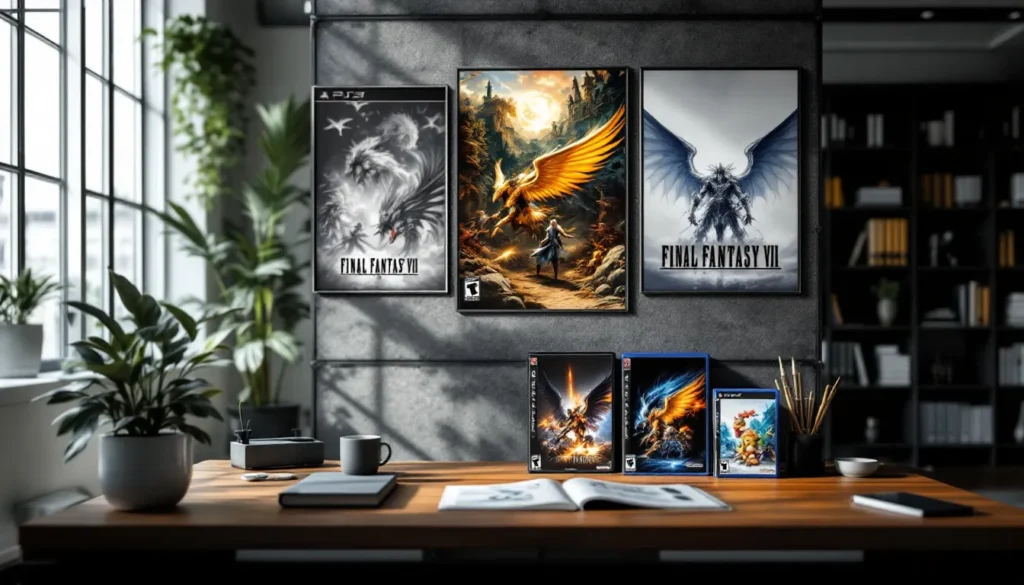
Original cover artwork has become a serious collector market. Gallery-quality prints of iconic cover designs sell for significant premiums. Auction sites regularly list original concept sketches and production artwork from legendary covers. Collectors understand that owning a print of the original Final Fantasy VII cover artwork is owning a piece of gaming history.
Authenticated first-run copies of games with iconic covers command premium prices. An original PS1 copy of Final Fantasy VIII in pristine condition with the original cover art intact is worth substantially more than a later reprint. Condition matters intensely, faded or damaged covers depreciate rapidly while mint condition examples appreciate.
Regional variations intensify collector interest. A Japanese Final Fantasy VII case looks different from North American and PAL versions. Dedicated collectors own all three, viewing them as distinct products even though containing identical software. The cover art justifies the investment.
Limited edition covers that featured unique artwork never reprinted become particularly valuable. When publishers discontinue special edition runs with exclusive covers, secondary market prices spike. A steelbook edition with limited-run artwork becomes investment-grade merchandise. Collectors monitor release announcements specifically to identify which covers will become scarce.
Digital marketplaces emerged specifically for trading cover art scans and high-quality photographs. Collectors who own multiple versions document the variations, building comprehensive reference databases. These communities operate with the seriousness of art historians, understanding that documenting and preserving these images serves the broader gaming preservation mission.
Internal link: The visual identity that steelbooks represent connects to broader platform design considerations explored in Final Fantasy XIV PS5:, which discusses how visual presentation shapes the modern gaming experience.
External link: For comprehensive coverage of Japanese gaming cultural artifacts and their significance, Siliconera regularly explores how visual design shapes JRPG identity and collector culture.
Special edition prices demonstrate collector market strength. A Final Fantasy XVI collector’s edition steelbook that retailed for $200 often sells for $400+ when secondary market copies become scarce. Investors with gaming knowledge sometimes purchase exclusive covers purely as financial assets, understanding that scarcity and nostalgia drive appreciation. This transforms cover art from aesthetic luxury into genuine collectible merchandise with measurable investment returns.
Internal link: The broader context of Final Fantasy’s design philosophy extends to interactive elements covered in Final Fantasy XIV Gameplay:, where visual storytelling translates into immersive experiences.
Conclusion
Final Fantasy game covers represent far more than marketing material, they’re visual artifacts that chronicle gaming’s artistic evolution. From pixel-art charm to photorealistic CGI to modern steelbook luxury, cover design reflects each era’s technological capabilities and aesthetic aspirations. The franchise’s willingness to treat covers as legitimate artistic endeavors, commissioning renowned artists and creating regional variants, established a template that influenced how the entire industry approaches packaging.
The covers themselves tell a parallel story to the games they contain. Final Fantasy X’s crystalline beauty mirrors the game’s thematic exploration of transience and beauty. Final Fantasy VII’s iconic imagery became inseparable from Cloud’s character even though being purely visual communication. Final Fantasy VI’s ensemble composition conveyed narrative complexity through compositional balance alone.
Collector communities have validated what developers always understood: these images matter. The secondary market for original artwork, the premiums paid for variant covers, and the gallery-quality production of modern steelbooks demonstrate that Final Fantasy covers transcended commercial function to achieve genuine artistic legitimacy.
Players continue seeking these covers, whether hunting for childhood nostalgia, building complete regional collections, or investing in limited-edition artwork. The market remains active, collectors remain engaged, and new releases continue receiving the artistic attention that established this franchise’s visual prestige. Final Fantasy game covers earned their place in gaming history not through marketing budgets but through consistent commitment to visual excellence across four decades and counting.
Internal link: For those interested in exploring Final Fantasy’s extended universe and merchandise, the Final Fantasy XIV Logo: The Iconic Symbol of Adventure You Can’t Ignore represents how the franchise extends visual branding beyond traditional cover art.
Internal link: Readers seeking comprehensive Final Fantasy coverage should explore the Final Fantasy XIV Archives for ongoing discussions of how the franchise continues evolving its visual and narrative identity.
External link: For deeper dives into RPG visual design and character development, RPG Site provides comprehensive analysis of how cover art and character design shape genre expectations.
External link: PlayStation-focused collectors should review Push Square for updated coverage of exclusive console releases and their variant cover designs.